
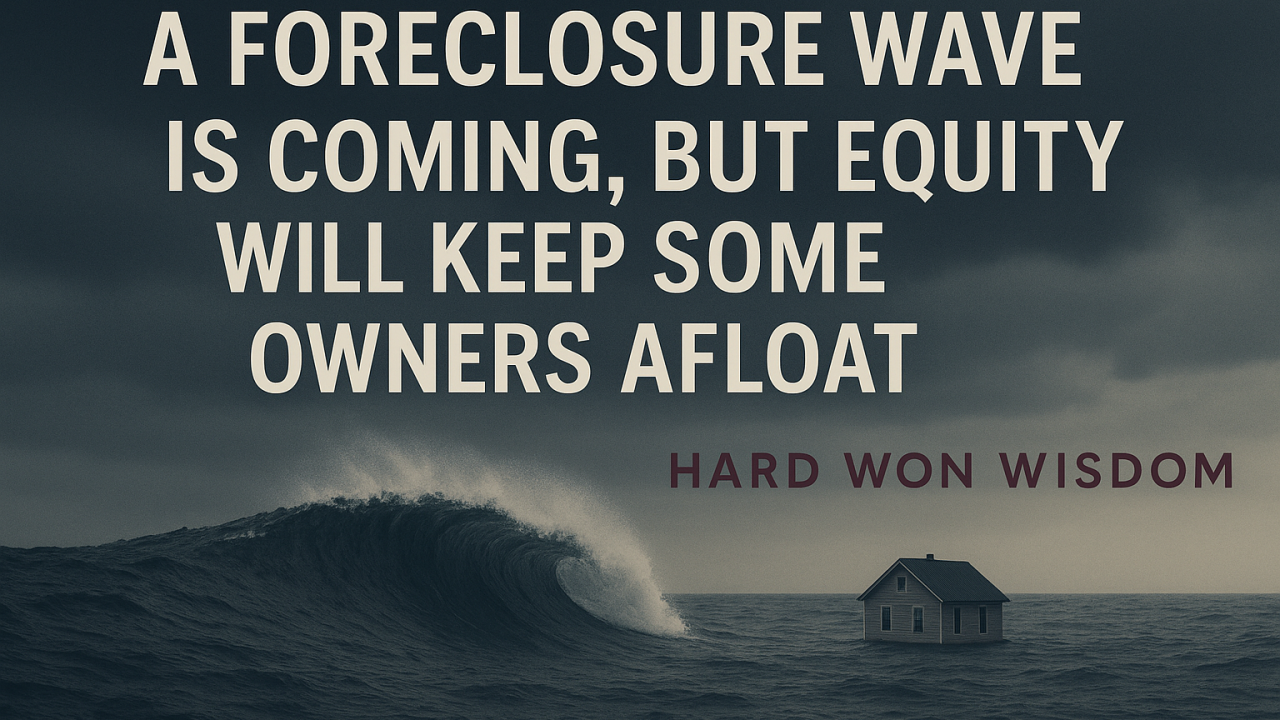
A Perspective Earned Through Experience
Before the data and the headlines, understand this. I have sold more than seven thousand homes and personally handled thousands of foreclosures during the last crash. My work stretched across more than forty counties in California and nine other states. I did not study the foreclosure crisis. I lived it. I walked through the homes, met the families, talked with the banks, and stood in driveways where everything had come apart. I know what happens when markets fail because I helped clean up the damage. When I talk about risk today, it comes from experience, not opinion.
Lessons from the Last Collapse
When ATTOM released its Q2 2025 Housing Risk Report showing fourteen California counties among the most vulnerable in the country, I knew what that meant. I have seen it before. I remember neighborhoods that went silent almost overnight. Toys left in yards. Furniture still in the rooms. Notices taped to doors that no one opened again. It was not just a financial collapse. It was human. Entire communities changed in a matter of months. That experience taught me what no graph or chart ever could. Once equity and confidence vanish together, people stop making rational choices.
What Went Wrong Back Then
The disaster of 2009 was built on bad lending and blind faith. Loans without documentation. Inflated values. Speculators using borrowed money to buy homes they never planned to live in. The entire system was built on air. When it broke, it took everyone with it. I saw good families lose homes because the market collapsed faster than any of us imagined. I saw banks without the systems or the staff to handle what came at them. It was not just a market correction. It was chaos.
Why This Time Is Different but Still Dangerous
The market today is stronger. Borrowers are more qualified, and lending standards are real again. But danger always finds a new door. This time the problem is shrinking equity. Prices have stopped rising, and high interest rates have trapped people in place. For a long time, homeowners could sell or refinance their way out of trouble. That safety net is thinning fast. When values flatten and debt remains high, people make the same mistakes I saw before. They wait. They hope. And they run out of time.
The Signs Already Showing
The pattern never changes. It starts quietly in small towns and second home areas. Then it spreads to communities with weak job growth. By the time the big cities notice, the damage has already begun. I am seeing it again. Properties sitting longer. Sellers chasing last year’s prices. Owners who refinanced at the peak now straining to make payments. The wave never announces itself. It builds slowly until it breaks.
What Homeowners Must Understand
If you own a home, especially if you are older or living on fixed income, the best time to act is before you fall behind. During the last crisis, I saw too many people lose everything because they waited too long to make a decision. You still have options if you act early. Selling, refinancing, downsizing, or restructuring can all preserve equity and dignity. Once foreclosure starts, those options disappear one by one.
What Lenders and Institutions Often Miss
Banks and investors tend to see risk as numbers. I see it as neighborhoods. I have done the drive-bys, the occupancy checks, the cleanouts, and the sales. I have seen homes turn from assets into losses because decisions were made from too far away. Real recovery always starts with local experience. You have to know which markets are softening, which owners are in distress, and where intervention still matters.
What Experience Teaches
Foreclosure is not just a financial event. It is emotional. It reshapes lives. I have seen both outcomes: people who faced reality early and moved forward, and those who ignored the signs until it was too late. The difference between the two is not luck. It is timing, awareness, and help.
The Bottom Line
ATTOM’s data is a warning. Risk is building and equity is shrinking. The question is not whether markets will shift, but whether homeowners and lenders will act before it is too late. This is not 2009, but the lessons are the same. You cannot control the market, but you can control when you act. I saw what happened when people waited. I also saw what happened when they faced the truth early. The difference was everything.
A foreclosure wave is coming. Equity will keep some owners afloat. The rest will need to decide whether they plan to swim or wait for rescue.